
One of the initial choices you will have to make when installing a home gym, commercial fitness center, or a garage exercise corner, will be that of the flooring. There are two types of materials that are the most popular: rubber and EVA foam. Both may appear alike on the surface, but there are proven distinctions in terms of durability, safety and return on investment when it comes to rubber gym mats vs EVA foam mats.
In this guide, we’ll go through exactly how these two materials do under gym conditions, so that you can make a decision that will really last throughout the year — at least as long as the years.
Why Rubber Gym Mats Are Better Than EVA Foam Mats
Rubber Gym Mats vs EVA Foam Mats: The Core Difference
EVA (ethylene vinyl acetate) foam is a lightweight, closed-cell material often used in puzzle-piece mats and yoga tiles. It feels soft and cushioned, which makes it popular for light stretching or kids’ play areas. Rubber, on the other hand, is a dense, heavy-duty material designed to absorb repeated impact, resist compression and survive years of heavy equipment use.
When people search for rubber gym mats vs EVA foam mats, they’re usually trying to figure out which one can actually handle dumbbells, barbells, treadmills and daily foot traffic without falling apart. That’s where the comparison gets interesting.
Durability: Built for the Long Run
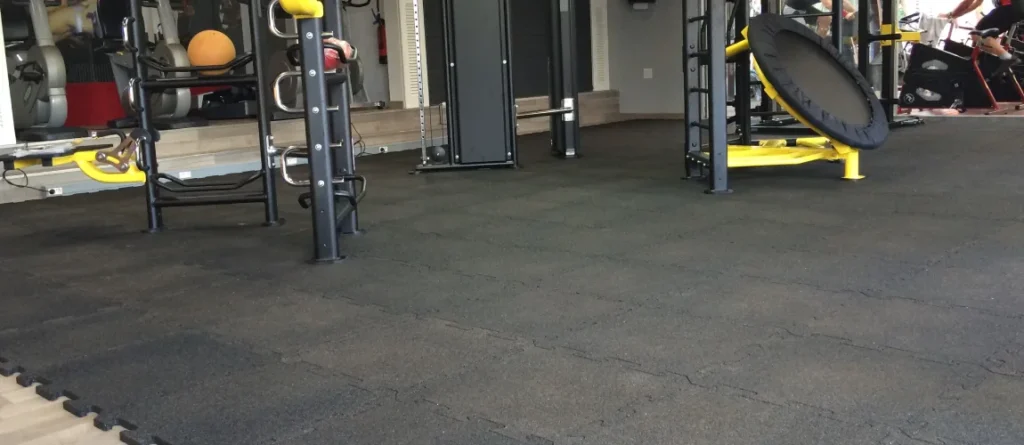
This is where rubber pulls far ahead. EVA foam tends to compress, tear, and flatten under consistent weight, especially in high-traffic zones or under heavy free weights. Over a few months of regular use, foam tiles often develop dents, cracks at the seams, or start crumbling at the edges.
Rubber flooring is engineered to resist exactly this kind of wear. It bounces back after impact, holds its shape under load-bearing equipment, and typically lasts several years longer than foam under identical conditions. If you’re comparing rubber gym mats vs EVA foam mats purely on lifespan, rubber mats is the clear winner.
Shock Absorption and Noise Reduction
Both materials offer cushioning, but the quality of shock absorption differs significantly. Rubber mats are denser, which means they distribute impact more evenly across the surface. This is especially important in areas where weights are dropped or where cardio machines vibrate the floor.
Foam, while soft to the touch, doesn’t handle sudden, heavy impact as well. It can bottom out quickly, transferring shock straight to the subfloor — which is a problem for apartment gyms or upper-floor setups where noise and vibration control matter.
Odor, Chemical off-gassing and Hygiene
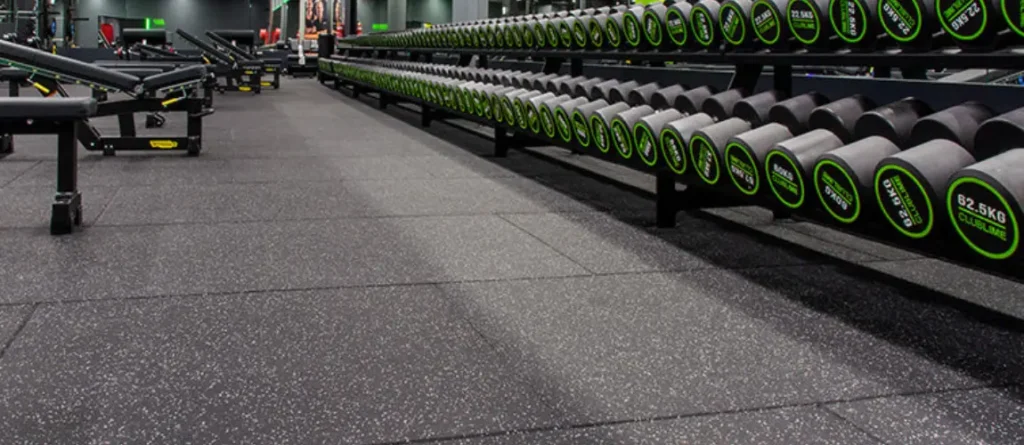
The strong smell of plastic which persists for weeks or days after unboxing foam gym tiles is not new to anyone who has done so. This is because of off-gassing that is a frequent problem with EVA foam products. Rubber mats can also have an initial fragrance, but quality rubber flooring tends to be more “fast fade” and has lower off-gassing.
Another factor is hygiene. The dense, non-porous surface of rubber absorbs less sweat, bacteria and moisture, and is less likely to cause mold than foam is, which can soak up liquids in the seams and get mold if not dried properly.
Cost Over Time: Cheaper Isn’t Always Better
EVA foam mats usually cost less upfront, which makes them tempting for budget setups. But because they wear out faster, many gym owners and home users end up replacing them every year or two. Rubber mats have a higher initial price, but their long lifespan means a much lower cost-per-year when you calculate total ownership.
If you’re weighing rubber gym mats vs EVA foam mats from a purely financial angle, rubber typically becomes the more economical choice within the first 18–24 months of heavy use.
Stability for Heavy Equipment
Foam tiles are notorious for shifting, curling at the edges, or separating at the seams when heavy machines (like squat racks or treadmills) sit on them for long periods. Rubber’s weight and density keep it firmly in place, providing a stable, non-slip base that doesn’t buckle under pressure — a critical safety factor for any serious training space.
When EVA Foam Still Makes Sense
To be fair, EVA foam isn’t without its uses. It works well for:
- Light stretching, yoga, or mobility work
- Kids’ play areas or low-impact zones
- Temporary or budget-friendly setups
- Areas that don’t see heavy equipment or repeated impact
If your space is purely for stretching or light activity, foam can still be a reasonable, affordable option.
Quick Comparison Summary
Popular Buying Options:
- Specialized flooring stores
- Online marketplaces
- Direct suppliers and manufacturers
In selecting a supplier, consider:
- Product variety
- Customization options
- Competitive pricing
- Positive customer reviews
By cooperating with a professional rubber mat supplier Dubai, you will be guaranteed of durable and high-performance products that would suit your needs.
Final Thoughts
When it comes down to rubber gym mats vs EVA foam mats, the right choice depends on how your space is actually used. For light stretching corners, foam can get the job done. But for anyone serious about weightlifting, cardio equipment, or a high-traffic training environment, rubber consistently outperforms foam in durability, safety, hygiene, and long-term value.
Choosing flooring isn’t just a cosmetic decision — it directly affects how safe, quiet, and long-lasting your workout space will be. Weigh your priorities, consider how heavily the space will be used, and pick the material that matches your training intensity.