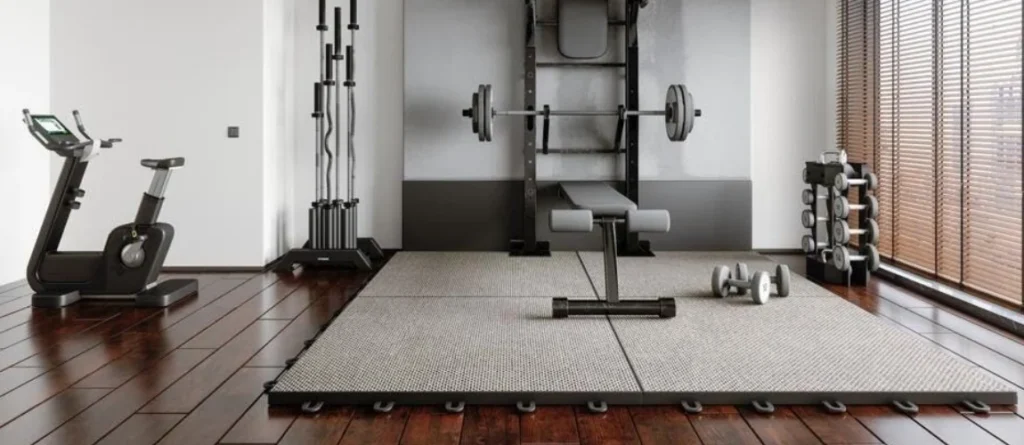
Many homeowners underestimate the importance of gym flooring until they notice scratched tiles, cracked flooring, or uncomfortable workout sessions.
Quality gym mats provide several advantages:
- Protect hardwood, tile, and concrete floors
- Reduce impact during jumping exercises
- Improve grip and prevent slipping
- Absorb equipment vibration
- Reduce workout noise
- Increase comfort for floor exercises
- Extend the life of gym equipment
Without proper flooring, heavy dumbbells and exercise machines can permanently damage your home’s flooring.
The type of flooring used depends on the kind of exercise.
- Rubber Gym Mats: Rubber mats are considered the most durable option for home gyms.
They are ideal for: Weightlifting, Functional training, CrossFit, Cardio equipment, Home fitness studios.
Advantages include: High durability, Water resistance, Easy cleaning, Excellent grip, Long lifespan.
- Foam Gym Mats: Foam mats are lightweight and comfortable.
Suitable for: Yoga, Pilates, Stretching, Children’s exercise areas.
However, foam mats are not recommended for heavy weights because they compress easily.
- Interlocking Gym Tiles: Interlocking tiles are popular because they are simple to install.
Benefits include: DIY installation, Easy replacement, Flexible room coverage, Portable design, Rubber Rolls
Rubber rolls create a seamless flooring surface.They work well for: Large home gyms, Multi-purpose fitness rooms, Professional workout areas.
Thickness depends on your workout style.
Choosing the correct thickness improves comfort while protecting both flooring and equipment.
Not sure whether rubber or EVA foam is the right choice? Read our detailed Rubber Gym Mats vs EVA Foam Mats comparison to understand the differences in durability, comfort, maintenance, and long-term performance before making your decision. Natural rubber remains one of the best materials because it offers:
- Superior durability
- Excellent shock absorption
- Slip resistance
- Low maintenance
- Long-term value
Recycled rubber is another popular option for environmentally conscious homeowners.
Before purchasing gym mats, consider these important features.
A textured surface improves stability during workouts.
This is especially important for:
- Burpees
- Lunges
- Jump training
- HIIT workouts
Shock-absorbing mats reduce joint stress while protecting the subfloor.
They are highly recommended for:
- Deadlifts
- Squats
- Jump rope
- Plyometric exercises
Noise Reduction: Rubber gym mats help reduce vibration and sound, making them ideal for apartments and villas.
Easy Maintenance: Choose mats that require only regular sweeping and occasional mopping.
Rubber flooring is one of the easiest materials to maintain.
Always measure your space to utilise when purchasing gym mats. Proper size prevents excess waste and ensures all floor is covered. Before you buy, if you don’t know the size of your space, visit our Rubber Mat Size Guide to determine the size of the mat that best fits your home gym.
A better approach is covering the complete workout area.
Examples:
- Small Home Gym:
2 × 2 meters
- Medium Gym:
3 × 3 meters
- Large Fitness Room:
- 4 × 5 meters
Complete floor coverage improve
Avoid these common mistakes.
Buying Mats That Are Too Thin: Thin mats wear out quickly under heavy equipment.
Ignoring Material Quality: Cheap foam mats often lose shape within months.
Choosing Smooth Surfaces: Smooth mats increase slipping risks.
Forgetting Moisture Resistance: Water-resistant mats last significantly longer.
Buying Based Only on Price: Higher-quality rubber mats provides better long-term value.
Rubber mats are generally the better investment for most home gyms.
Keeping gym mats clean extends their lifespan. Follow these simple steps:
- Vacuum weekly
- Mop with mild detergent
- Dry completely
- Avoid harsh chemicals
- Clean spills immediately
Proper maintenance keeps mats looking new for years.
Choosing the best gym mats for home workouts depends on your workout style, available space, equipment weight, and flooring type. Investing in durable, non-slip, shock-absorbing rubber mats improves comfort, protects your home, and creates a safer training environment.
Whether you’re building a compact home fitness corner or a fully equipped workout room, selecting the right flooring will enhance every exercise session.
For premium-quality solutions designed for residential and commercial fitness spaces, browse our Gym Mats Dubai collection. You can also explore Rubber Flooring Dubai for complete flooring systems and visit Rubber Mats Dubai to discover a wide range of durable rubber mat solutions for homes and businesses.